
Part of our work on travel and tourism
Travel
The Commission Reconciliation Process Nobody Staffs Properly
Big Sky Consulting Group · September 28, 2026 · 8 min read
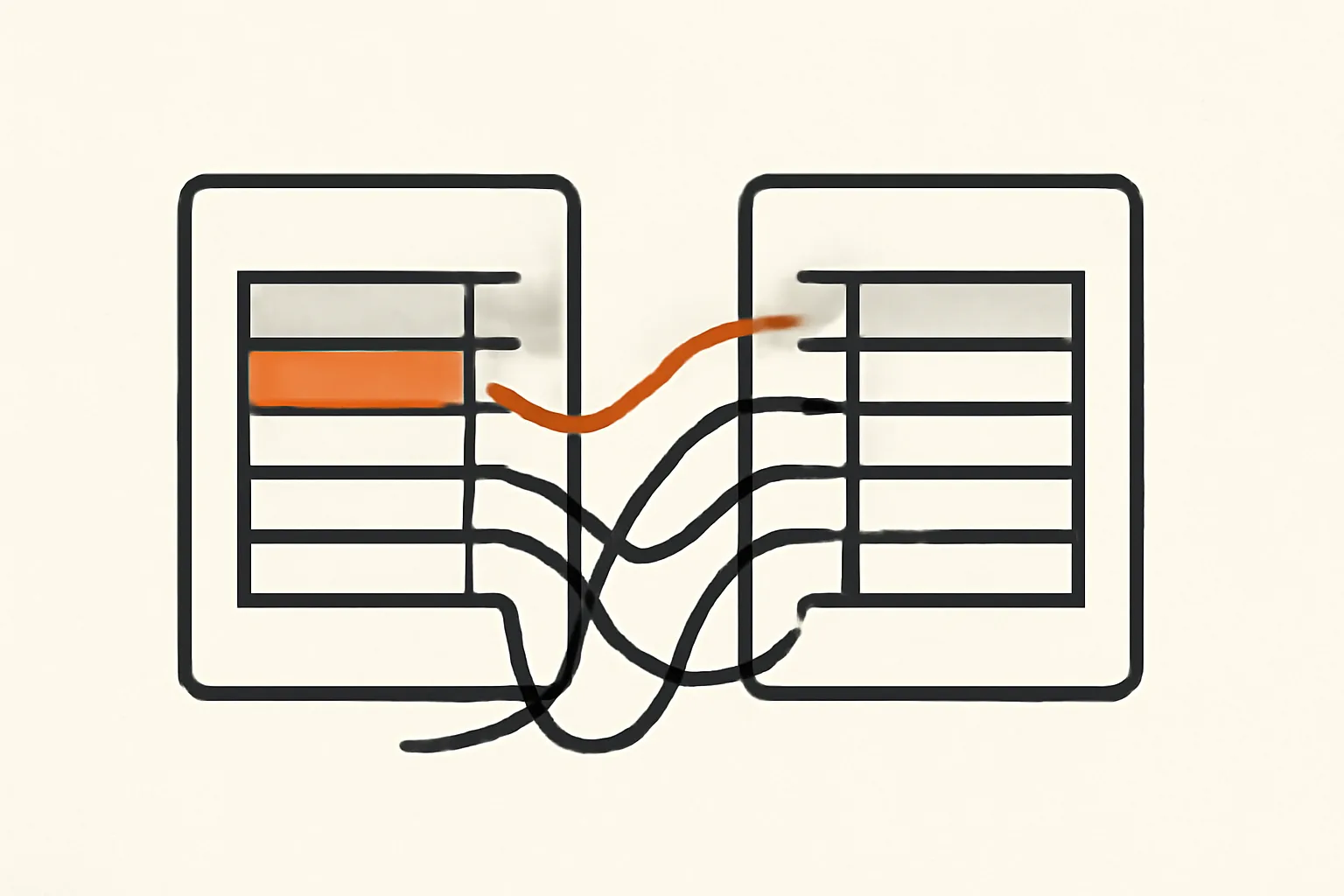
The money you earned in May, noticed in November
A client stayed five nights at a resort in May. Your advisor booked it through the GDS, confirmed the rate, collected nothing up front, and moved on to the next booking, because the commission is paid by the hotel after checkout and that is how the business works.
In November somebody pulls a report and notices the resort never paid. Now the questions start. Was the stay shortened? Did the client change the dates by calling the hotel directly? Was the booking made under a rate that turned out to be non-commissionable? Did the hotel's system drop the agency identifier when the reservation moved to a new confirmation number? Nobody knows, because nobody looked when the answers were still easy to get. The front desk agent who handled the change has left. The client does not remember. The resort's accounting office wants a confirmation number that no longer matches anything in its system.
The commission was lost in June. It was discovered in November. Everything between those two dates is where the money goes.
Page one has priced the failure instead of fixing it
Search for unpaid hotel commissions and most of what you find is recovery. Firms like Commtrak and Onyx CenterSource's RecoverPro work aged bookings on your behalf and take a share of what they collect. Commtrak bills hotels in repeating cycles until each item resolves or ages beyond two years from the travel date.
These are legitimate services and some agencies should use them. But look at what the category's existence tells you. When a market organizes itself around contingency collection, it has decided the failure is permanent and the only question is who takes a cut of the cleanup. Recovery is what you buy after the record has aged past usefulness. It is priced the way it is because the easy money was already lost upstream.
The size of that upstream loss is contested, and worth reading carefully. Sion, a commission management platform, says more than 40 percent of commissions either carry discrepancies or go unpaid. Onyx describes manual recovery as able to leave "up to 40%" uncollected. Both are vendor estimates from companies selling the fix, not audited figures, and we would not put either in front of a board. The mechanism behind them is not in dispute, though, and you do not need an industry figure to measure your own.
Why the formal channel recovers so little
The American Society of Travel Advisors runs a Hotel Watch List for exactly this problem. A member reports a hotel that has not paid 45 days or more after checkout. ASTA contacts the property in writing and gives it 30 days to pay before listing it. Since the reporting tool launched, ASTA reports recovering just under $60,000 in total, with a stated 2026 goal of $100,000. One advisor's $16,000 group commission arrived 113 days after the last guest checked out, and only after ASTA stepped in.
Set that total against an industry where commissions make up the large majority of agency revenue. The small number is not a failure of ASTA's process. It is a measure of how few unpaid commissions are ever formally chased. Most are never identified as unpaid in time to report, and most of the rest are written off by an advisor who decided the phone calls were not worth it.
That is the pattern worth naming. The loss is not concentrated in hotels that refuse to pay. It is spread thinly across thousands of bookings that nobody matched.
The step that produces no revenue on the day it is done
Strip the process down and there is one job at its center: match a booking record to a payment, line by line, inside a window short enough that the answer is still findable. Onyx's own data puts the average hotel commission payment at 39 days after checkout. ASTA's threshold is 45. Between those two numbers is the window where a missing payment is a question. Past it, the missing payment becomes a collections project.
The reasons commissions go unpaid are ordinary. The booking lacked a valid agency identifier, or lost it. The rate was net, wholesale, or otherwise non-commissionable, and nobody caught that at booking. The dates changed, the stay was shortened, or the reservation moved between systems under a new confirmation number, so the stay record no longer matches the booking record. The hotel sent the booking data and the funds at different times, which Onyx itself names as the core cause of payment delays through its network.
Every one of those is resolvable in week six and expensive in month six. So why does nobody do it in week six?
Because the job produces nothing on the day it is done. An advisor who spends an afternoon matching remittances has sold nothing that afternoon, and in a commission-driven agency the advisor's time is the revenue. The owner sees the same trade from the other side: an hour of matching is an hour not booking. Onyx describes the blind spots precisely. You cannot see a late payment until you go looking for it. You cannot see a shortfall until you have matched every line. You cannot tell a disputed commission from a slow one. All three describe a process that only exists if somebody is assigned to it.
So the work falls to whoever gets to it: the owner on a Sunday, the advisor who happens to be tidy, the bookkeeper who reconciles bank deposits but not booking records. None of them owns it. The eHotelier piece quoted above makes the same observation from the hotel side: commissions sit between finance and commercial, with no one responsible for the whole process. When the same gap shows up on both sides of a transaction, it is structural, not a staffing accident.
This is the general shape of the problem. Which parts apply to your process depends on answers only your systems can give.
Put us on it, from $5,000The hotel side has the same problem, pointed the other way
If you run a hotel management company, you are on the paying end of this, and the unstaffed step costs you differently.
Agency business is not small. Onyx data, reported by eHotelier, has the agency channel growing 11.8 percent year over year in the first half of 2026. Booking.com and Expedia each grew about 6 percent in the first quarter. An advisor who is paid late by your property twice does something entirely rational. They book the next client somewhere that pays on time. Nobody attributes that to accounts payable, because the lost booking never shows up anywhere.
Some brands have started treating payment speed as a commercial lever. Rocco Forte Hotels adopted Sion in July 2026 and committed to paying within 24 to 48 hours of approval. That is not a back-office decision. It is a distribution decision made in the back office.
The pattern matches what we see across management companies generally. When a portfolio cannot compare two properties without calling both GMs, it also cannot tell you which properties pay agents late, because the payment timing lives in each property's own habits.
What a recovery vendor cannot do for you
We are not arguing against recovery services. For a book of aged commissions, contingency collection is often the right call, and someone who does it all day will collect more than your advisors will.
The argument is about sequence. Recovery works the tail. It cannot change how long the tail is. Every commission that ages past 45 days is a commission you are now paying a percentage to collect, when it would have cost you a short email in week six. An agency that matches inside the window shrinks the recovery book, and the recovery firm becomes a backstop instead of a business model.
The same shape shows up well outside travel. Consumer products companies find their trade promotion deductions late for the same reason: the record that would settle the question was never structured at the moment it was created. Group sales teams at hotels lose margin after the contract is signed because the person measured on the sale is not the person who works the file afterward. Commission reconciliation is the same failure. The person rewarded for the booking is not the person asked to confirm it paid.
Nobody wants to be the one who owns the matching. It is dull work, and it is dull right up until you add up what it would have caught. Call it commission impossible, and then staff it anyway.
What we would look at first
Before buying a platform or signing a recovery agreement, we would want to see a few things from your own records:
- For bookings with checkout in the last six months, what share has been matched to a payment, and what share has simply not been looked at?
- Of the unpaid ones, how many are past 45 days today?
- Where does a changed or shortened stay get recorded on your side, and does anyone update the expected commission when it happens?
- Which ten properties account for most of your unpaid balance, and is that list the same as it was last year?
- Who, by name, is responsible for noticing a missing payment in week six?
The last question usually settles the diagnosis. If the answer is a person's name and a weekly hour on their calendar, you have a volume problem, and software may be the right answer. If the answer is "everyone" or "the owner, eventually," you have an ownership problem, and no platform fixes that on its own.
Deciding who should own the matching, whether your volume justifies a commission platform, and how much of your aged balance is worth handing to a recovery firm depends on what your own booking and payment records say. If your commissions keep turning up missing months after the stay, let us look at the weeks right after checkout before you pay someone to chase the six months after.