
Part of our work on consumer products
Consumer Products Industry
The Trade Promotion Reconciliation Problem, and Why Finance Always Finds It Late
Big Sky Consulting Group · September 23, 2026 · 8 min read
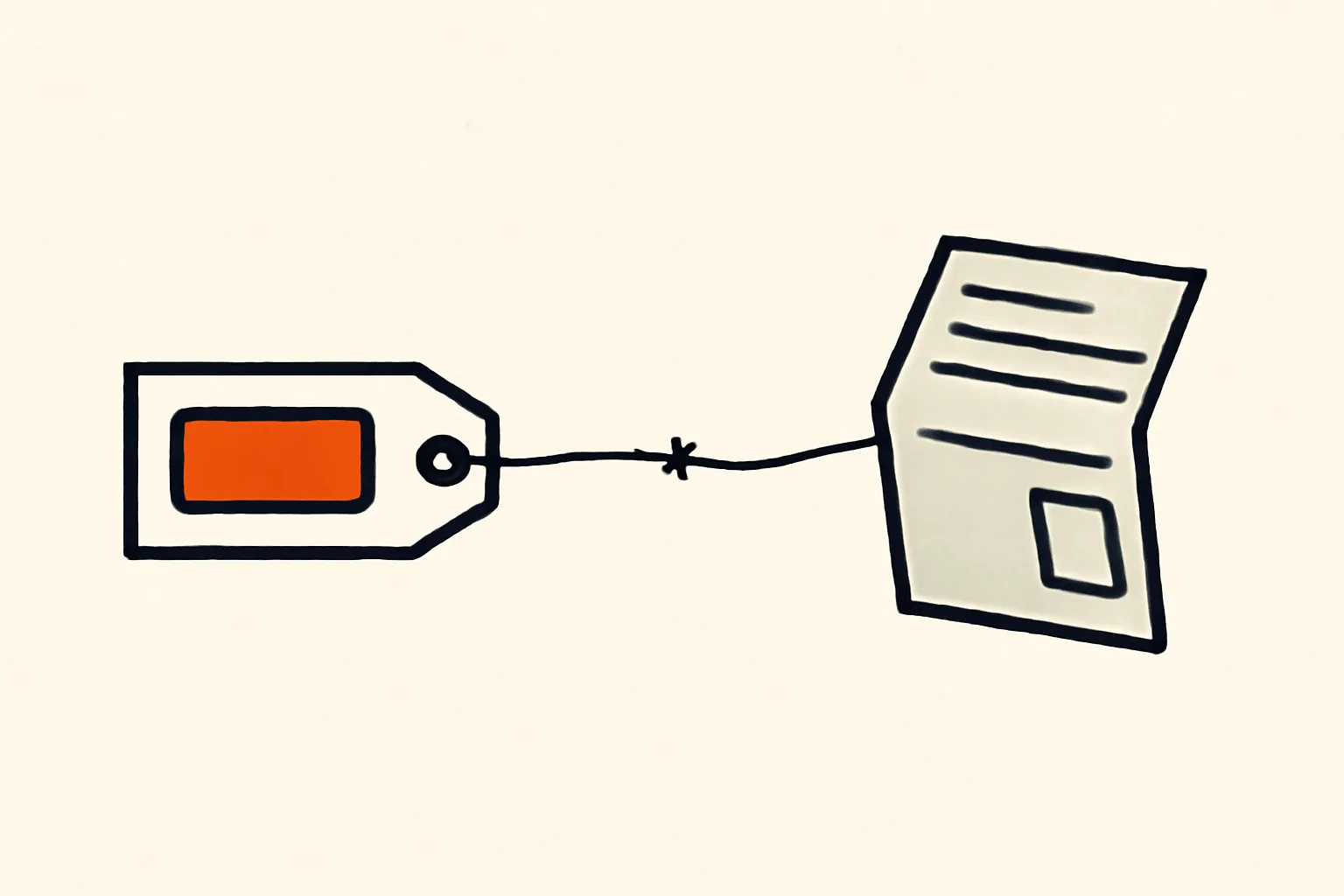
Nobody is late. The information does not exist yet.
Your controller closes the quarter and the trade accrual is off again. Not by a rounding error. By enough that someone has to explain it to the board. Meanwhile accounts receivable is sitting on a stack of short-paid invoices, each one carrying a deduction code from a retailer's system, and a note on half of them that says something like "promo" or "PA" and nothing else.
The standard diagnosis is bandwidth. Finance is behind, so hire a deductions specialist, or buy a tool that ingests remittances and matches them faster. Every vendor selling into this problem frames it that way, because bandwidth is a problem software can sell against.
We think the diagnosis is wrong. Lateness in trade promotion reconciliation is structural. Follow the life of a single promotion and you can see why.
Sales agrees a promotion with a buyer. It might be a temporary price reduction funded as a scan-back, an off-invoice allowance on a window of orders, a display fee, or some combination. The terms live in an email thread, a deal sheet, a broker's spreadsheet, or a retailer portal that one account manager has the login for. The retailer executes the promotion in its stores, on its dates, at its depth. Then, weeks or months after the product sold, the retailer pays itself back by deducting from an unrelated invoice, using its own code, its own description, and its own reading of what was agreed.
That deduction is the first moment finance learns the promotion happened in the form the retailer understood it. Nobody in that chain was slow. The evidence finance needs to check the deduction genuinely did not reach finance until the money was already gone.
The clock starts after the evidence goes cold
The timing is what turns an annoyance into a margin problem.
Deductions for promotional activity can arrive anywhere from a month to two years after the sale. Retailer dispute windows run shorter, commonly 30 to 90 days from the deduction. Post-audit claims are worse. Third-party auditors working for large retailers routinely look back one to two years, and the supplier typically has around 60 days to contest before the claim is treated as accepted. The burden of proof sits with you throughout.
So the arithmetic is backwards. The window to argue opens long after the people who negotiated the promotion have moved on to the next three, and closes before anyone can rebuild what they agreed from an inbox. A deal sheet that existed in March and cannot be found in November is, for dispute purposes, a deal that never existed.
In a Startup CPG session on fighting invalid deductions, Daniel Scharff put the brand side of this plainly. Deductions arrive as PDFs in every format, coded differently by every customer, and if you are not tracking your promotions you cannot tell whether any given one is valid. That last clause is the whole problem. You cannot audit a claim against a record you never made.
Why the accrual is always a guess
There is an accounting side to this that makes the lateness visible every month, not just when a deduction lands.
Under ASC 606, trade promotions are consideration payable to a customer. They reduce revenue, and because the final amount depends on what the retailer sells and claims, they are variable consideration that has to be estimated at the time of sale. Finance books an accrual for promotional liability the day the product ships, then trues it up when the deductions finally arrive.
If the promotion calendar finance works from is a copy of whatever sales remembered to send over, the accrual is an estimate of an estimate. The true-up then lands quarters later, and it lands as a surprise, because nothing in between gave finance a reason to adjust. The controller did the job correctly. The input was not a record. It was a recollection.
This is not a small line to be approximately right about. Trade spend is routinely one of the largest items on a CPG income statement, with the figure most often cited at around a fifth of revenue. McKinsey research built on Nielsen data found that 72 percent of trade promotions in the US lose money. A brand that cannot reconcile its promotions cannot tell which of them are in the 72 percent, because it cannot see what it actually paid for each one.
This is the general shape of the problem. Which parts apply to your process depends on answers only your systems can give.
Put us on it, from $5,000What deduction software does, and does not, fix
We are not against deduction management tools. For a brand at volume they do real work. They pull remittance data out of retailer portals, normalise the codes, route disputes, and stop things from expiring unnoticed. That is valuable, and at a certain deduction count it is the difference between disputing and giving up.
But look at what a tool can match against. It can match a deduction to an invoice, to a shipment, to a proof of delivery. Those records exist in your systems because the transaction produced them automatically. For a promotional deduction, it needs to match against the terms of the promotion: which items, which stores, which dates, which rate, which funding method. If those terms were never captured in a structured form, the tool has nothing to match. It will route the deduction to a queue, faster and with better formatting, and a person will open the queue and go looking for an email.
That is the pattern we see most often in this category. The software arrives, the mechanical part of deduction handling improves, and promotional deductions remain the stubborn residue that the team still clears by hand. The vendor calls it an adoption problem. It is a data problem that was upstream of the purchase.
The contrast with shortage and compliance deductions is instructive. In the same Startup CPG session, Anthony Chang, who ran the direct customer accounts receivable side at BodyArmor from 2020 to 2025, described $7.6 million of product shortage deductions in 2024, of which the team recovered about $7 million. Shortages are recoverable at that rate because the evidence is generated by operations whether anyone wants it or not: the bill of lading, the signed delivery receipt, the ASN. Promotions generate no equivalent record on their own. Someone has to decide to create it.
It is the same shape as the problem we described in what a DTC brand has to automate before its first retail PO: the part of the chain that can be automated is the part that already produces data, and the part that costs money is the part that does not.
The decision underneath the tool decision
So the question worth asking is not whether to buy deduction software. It is whether sales is willing to record a promotion, in a form finance can match, before the money moves.
That sounds like a process tweak. In most brands it is a negotiation between two functions with different incentives. Sales is measured on volume and on keeping buyers happy. Formalising every agreement, including the ones reached on a call at the end of a quarter, adds friction to the part of the job that is working. Finance is measured on accuracy and on closing on time, and bears all of the cost of the missing record without any of the authority to demand it.
Brands that get this right tend to share one feature. Someone senior has decided that an unrecorded promotion is not a promotion. If it is not in the agreed format, with the terms finance needs, before the event starts, the brand does not honour a deduction against it without a fight. That rule is not technical. It is organisational, and it is only credible if the person enforcing it can overrule a sales leader who wants to keep a buyer happy.
Once that decision exists, the rest follows in a fairly ordinary way. The record becomes something a system can hold. The accrual becomes a sum of known commitments instead of a percentage. Deductions arrive against terms that were written down in advance, and the ones that do not match become obvious rather than ambiguous. At that point, a deduction tool has something to work with, and the case for buying one gets much easier to make, or occasionally disappears, because a smaller brand with clean promotion records can often clear its volume without one.
Without that decision, no tool fixes this. You would be automating the search for evidence that was never recorded. We have made the same argument about 3PL billing, where the rules have to be settled before the billing engine can apply them, and more generally about when automation is the wrong first answer. The software is real. It is aimed at the half of the problem that was already tractable.
What this looks like from the outside
A few signs usually tell us a brand has a structural reconciliation problem rather than a capacity one:
- The trade accrual is adjusted by a round number at quarter end, and nobody can say which promotions the adjustment belongs to.
- The deductions team's hardest cases are promotional, while shortage and compliance disputes move at a reasonable pace.
- Asking "what did we agree with this retailer for this event" requires finding the account manager, not opening a system.
- Promotion post-mortems report lift, but not what the promotion finally cost once every deduction against it had landed.
None of those are fixed by working faster. All of them are fixed, eventually, by changing where the promotion is first written down and who is allowed to skip that step.
Where the writing stops
We can describe the pattern with some confidence, because it repeats across categories and channels. What we cannot do from here is tell you where your promotion terms actually live today, how much of your deduction backlog is promotional versus operational, whether your accrual method would survive a serious look, or who in your organisation has the standing to make sales record a deal before it runs. Those answers are specific to your accounts, your broker relationships, and your people.
If your controller keeps explaining trade true-ups that nobody saw coming, and your deductions team keeps losing promotional disputes because the deal sheet is in someone's inbox, talk to us. The useful first conversation is not about software. It is about where the promotion record should be born, and who owns it from there.